
Solar in Dorset: roof condition, coastal exposure and generation.
Most Dorset homes can take solar, but the answer comes down to what is on the roof, how exposed the property is and how your household uses power.
Free and no obligation. Payment options available on qualifying routes.
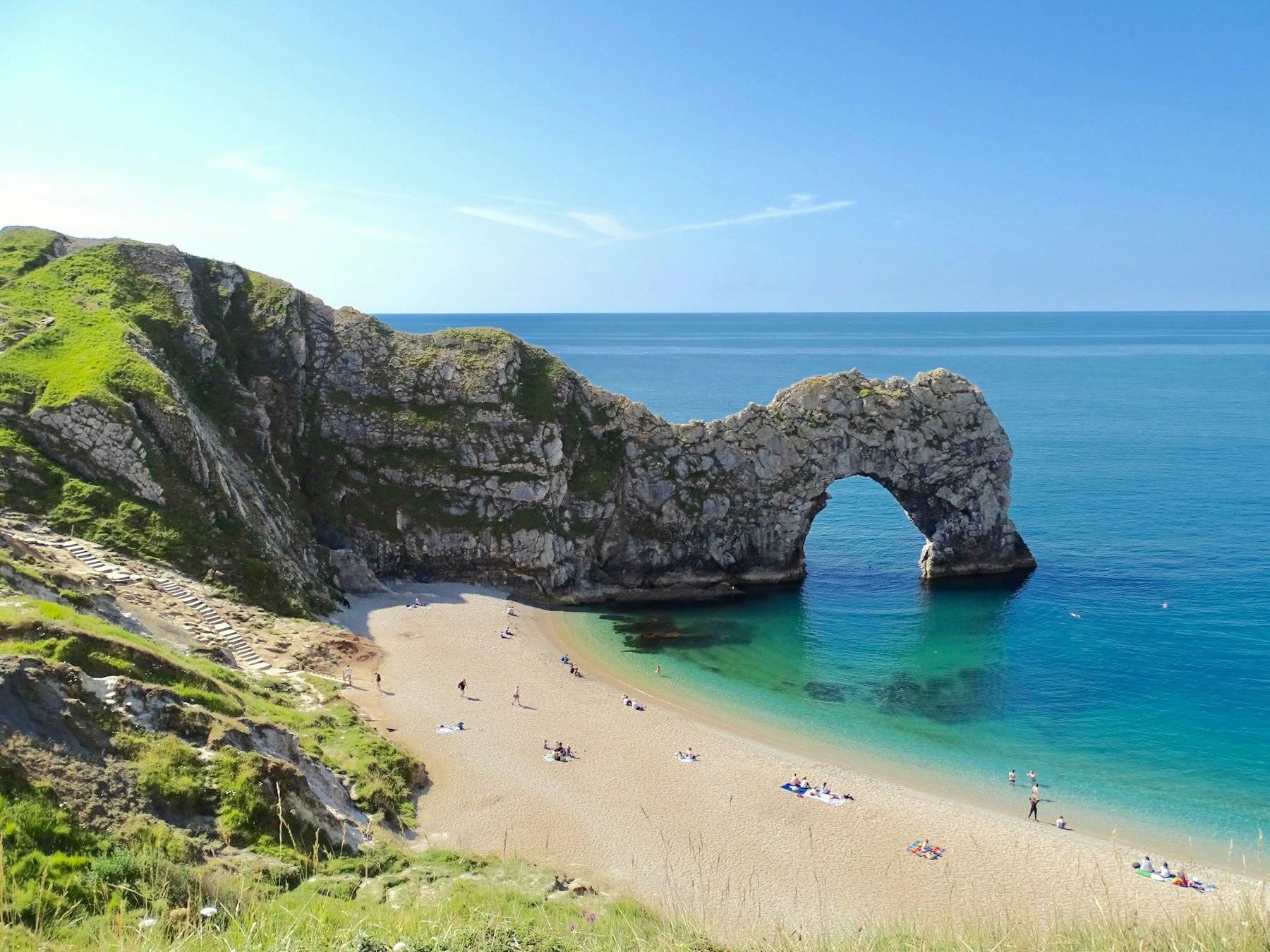 The Dorset coast
What Dorset conditions mean for your roof.
Bournemouth averages around 1,780 hours of sunshine a year (1991 to 2020), against a UK average of roughly 1,403. Local sunshine figures are only background. What decides your result is the roof's direction and pitch, any shading, the size of the system and how much of the output your household uses, which is why the estimate comes from the property itself.
That is also why we do not promise a fixed payback. Dull days reduce output without stopping it, and what counts is expected generation over a full year.
Stone, thatch and listed buildings.
Dorset has more older, traditionally built homes than many counties. Villages across Purbeck and inland Dorset are often built from local Purbeck or Portland stone, and thatch is still common on period cottages, particularly around the Blackmore Vale and the smaller market towns.
That does not put solar out of reach. It does mean someone has to look at your actual roof before any design work.
Stone and slate roofs
Need fixings matched to the material, checked at survey.
Thatched roofs
Cannot carry panels directly. A ground array or another roof on the plot is usually the answer.
Listed buildings
Always need listed building consent for any alteration, solar included.
What sea air and wind change.
Homes close to the coast see stronger wind and salt air. That affects how panels are fixed, which equipment suits the setting and how often a check for salt residue is worth doing. It is part of the design, planned at the survey, and not a reason to avoid solar.
The Dorset National Landscape and your roof.
For most Dorset homes, solar panels are permitted development, so no planning application is needed as long as they stand no more than 200mm proud of the roof and stay below the ridge. Part of the county, including much of the coast and the Isle of Purbeck, lies within the Dorset National Landscape (the new name, since November 2023, for the Area of Outstanding Natural Beauty). Visual impact is judged more strictly there, and permission can be required for work that would be fine elsewhere.
Whether your property is inside the boundary, and what that changes for your roof, depends on the exact address. We check every Dorset home at the survey.
What that means
A standard roof-mounted system on an ordinary house often remains permitted development even in the designated area. Permission is more likely for ground arrays, big or highly visible installations and listed buildings, and we tell you early which group you fall into.
Listed buildings always require listed building consent, wherever they are, because any alteration needs separate approval.
See what your Dorset roof could generate
Tell us about your home and what you're considering. We'll review suitability, including a planning check for your property.
Free and no obligation. Asking about payment options is not a finance application and won't affect your credit file.
No obligation to proceed. If the property looks suitable, a member of the solar team may contact you to clarify the details before a proposal is prepared.